
WEDDING
Tomsk, Kemerovo, Amur regions
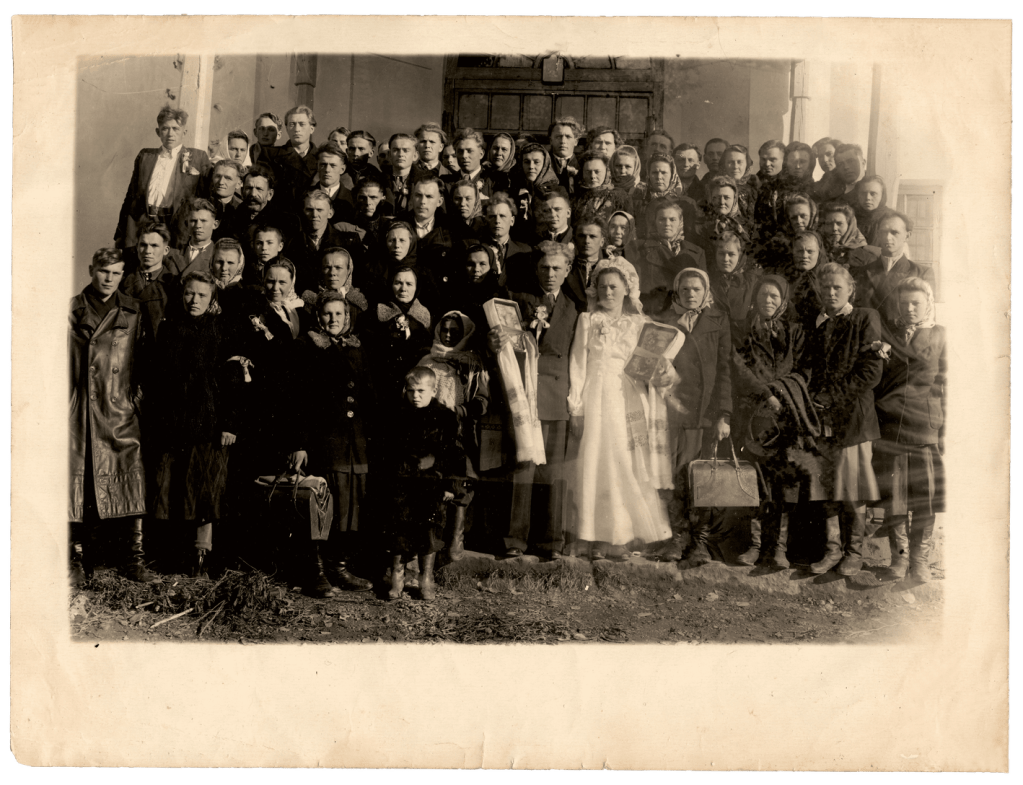
Wedding of special settlers, Tomsk, 1950s
Source: Private archive of Vira Tsvyk (Borovets)
vIRA TSVYK (BOROVETS)
deported in 1950 to the Tomsk region
And I got married there in Siberia. [The man’s name was] Tsvyk Mykola Pavlovych. I met him in Klevan [at the transit station] and we made friends there. We grew up together, and stayed in Tomsk together. We were going out with my husband for five years, and then I married him at 17. There was a wedding. I also had a church ceremony. The churches were available. All Ukrainians had weddings and the church ceremonies.
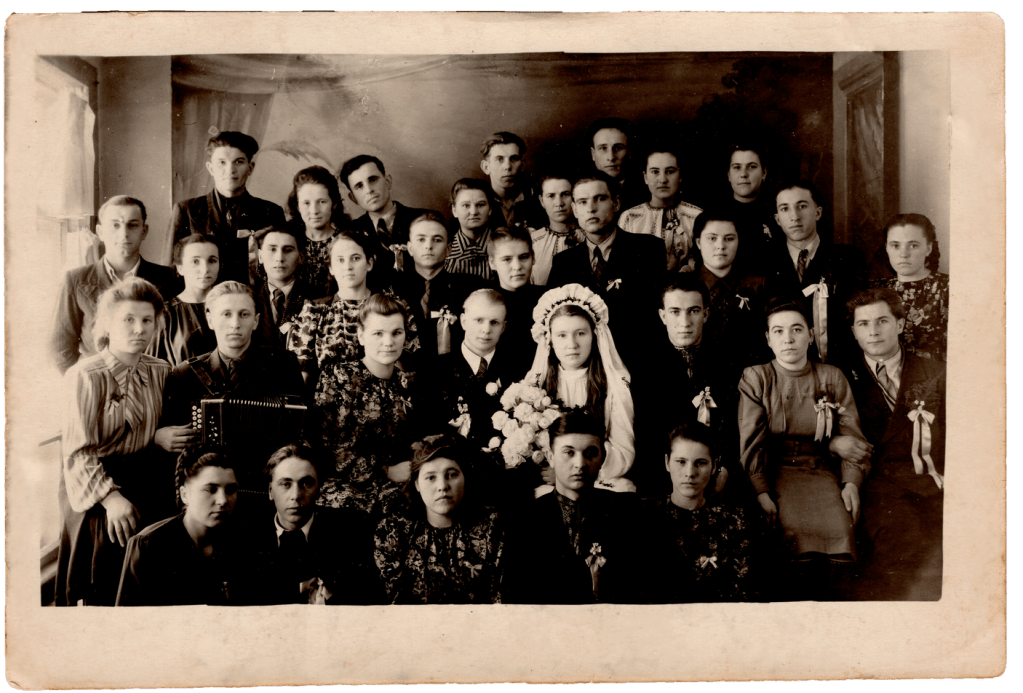
Wedding of special settlers, the city of Prokopyevsk in the Kemerovo region, 1950s
Source: Private archive of Mykhailo Kutsyaba
TAMARA VRONSKA
historian
They were allowed to marry at the special settlement only with the consent of the commandant. The marriage had to be formalized at the registry office. In addition to the general regime restrictions, there was a ban on changing surnames so that women would not fall out of sight of the authorities after marriage. That is why many of them have double surnames. More often they got married in a special settlement after Stalin’s death, when there were hopes to be released. The Soviet government encouraged the creation of new families, hoping that people would stay forever in remote areas of the Soviet Union. They were promised a loan to purchase construction materials and allocated a land plot for construction.
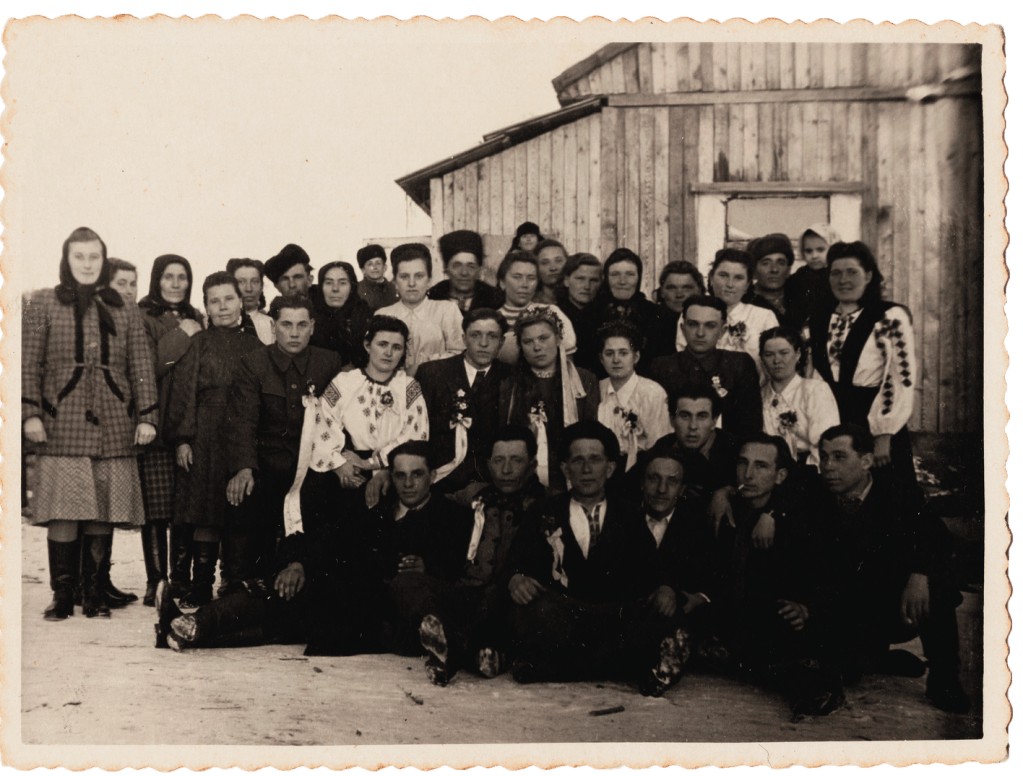
Wedding of special settlers, Amur region, 1950s
Source: Private archive of Maria Kalyniak (Zavadka)
LIA DOSTLEVA
cultural anthropologist
If you do not know that these photos were taken in a special settlement, you may not notice that they are somewhat different from typical wedding photos. Signs that these weddings take place in a special situation can be discerned in some details and do not dominate the space of the frame: here and there in the background, you can see the wooden walls of poor barracks, in some photos women are dressed in gowns handmade from the same fabrics; people pose in thin shirts and embroidered shirts, although there is snow on the ground and other guests wear winter clothes. This apparent ‘normality’ of deportees’ wedding photographs can be explained by several factors. First, even in exile, people tried to maintain rituals that were important to them, and the space of photography was deliberately designed to look as “normal” as possible. Secondly, these photographs are a good illustration of what researchers call the limitations of photography as a document: the most important thing here is not what we see in the frame space, but what is left outside. It is also significant what we learn from other sources such as eyewitness accounts, written testimonies, historical research, etc.
 After SIlence