
RETURN FROM THE GULAG
Khabarovsk Territory and city Magadan
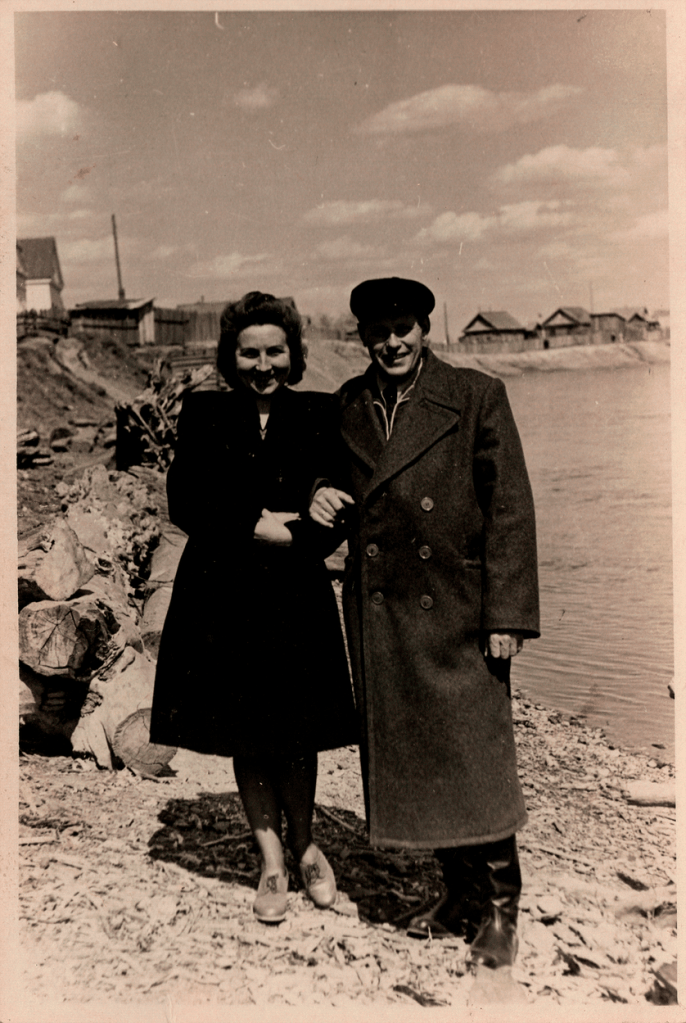
Yevhen Pokhodzhai, released from the Gulag camps, with his wife Iryna, Khor village in the Khabarovsk Territory, 1956
Source: Private archive of Natalia Boyko (Pokhodzhai)
nATALIA BOYKO (POKHODZHAI)
was born in a special settlement in Khabarovsk Territory
First they came and took away the father, and after a while they came and took away the mother, the granny, and a brother. My brother was then in his fourth year. My father was in Yakutia, in the camps. And my mother, my granny, and a brother were deported to the village of Khor, Lazo district, Khabarovsk Territory. My father served [the term] completely. He did not get any amnesty. And then I returned to the Khor, because [my] granny, mother and brother lived there. 10 months later, I was born.
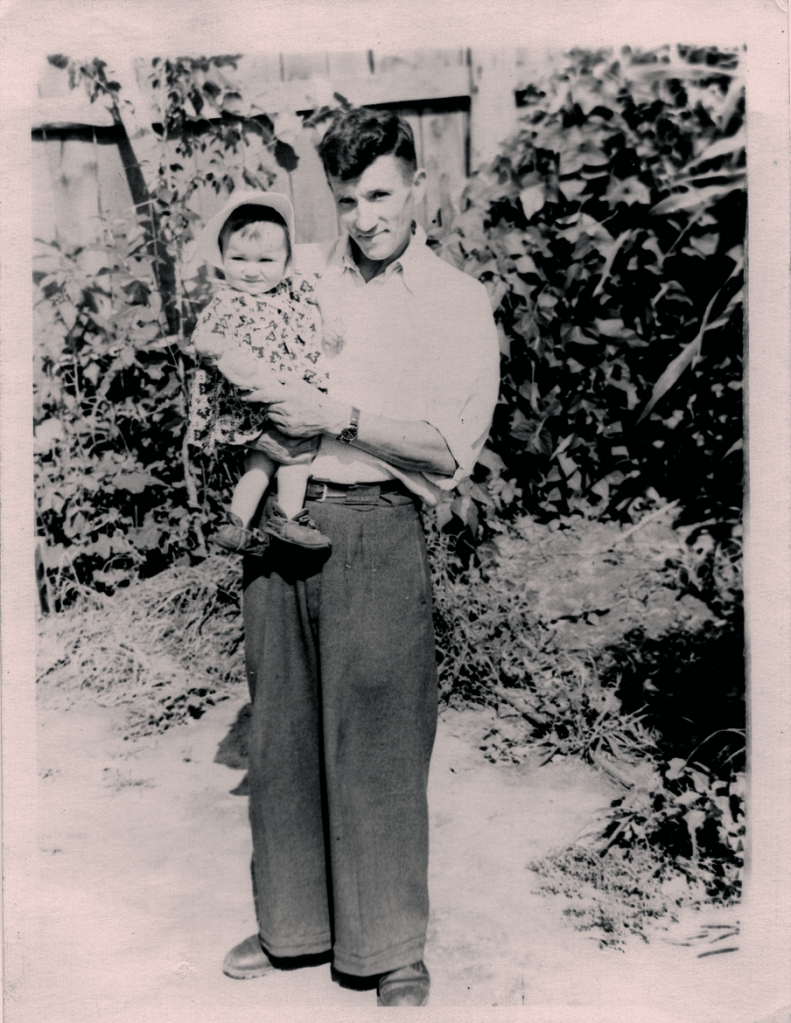
Julian Skytsky, released from the Gulag camps, with his daughter Lidia, Khabarovsk, 1957
Source: Private archive of Lidia Kitsyla (Skytska)
TAMARA VRONSKA
historian
On March 11, 1952, the Presidium of the Supreme Council of the USSR passed a decree that stipulated that prisoners of the Gulag camps whose term of imprisonment ended had to be sent to their families in places of special settlements. They stayed there for life, under the supervision of the MGB authorities. Shortly after, it was also decided to also send to special settlements those released prisoners who had no relatives in remote areas. Due to this ‘reunification’ of families in early 1953, the number of special settlers from Western Ukraine grew. The official reports registered 175,063 of the so-called OUN members. They included 47,414 men and 83,905 women. The lists also included 40,247 children under 16.
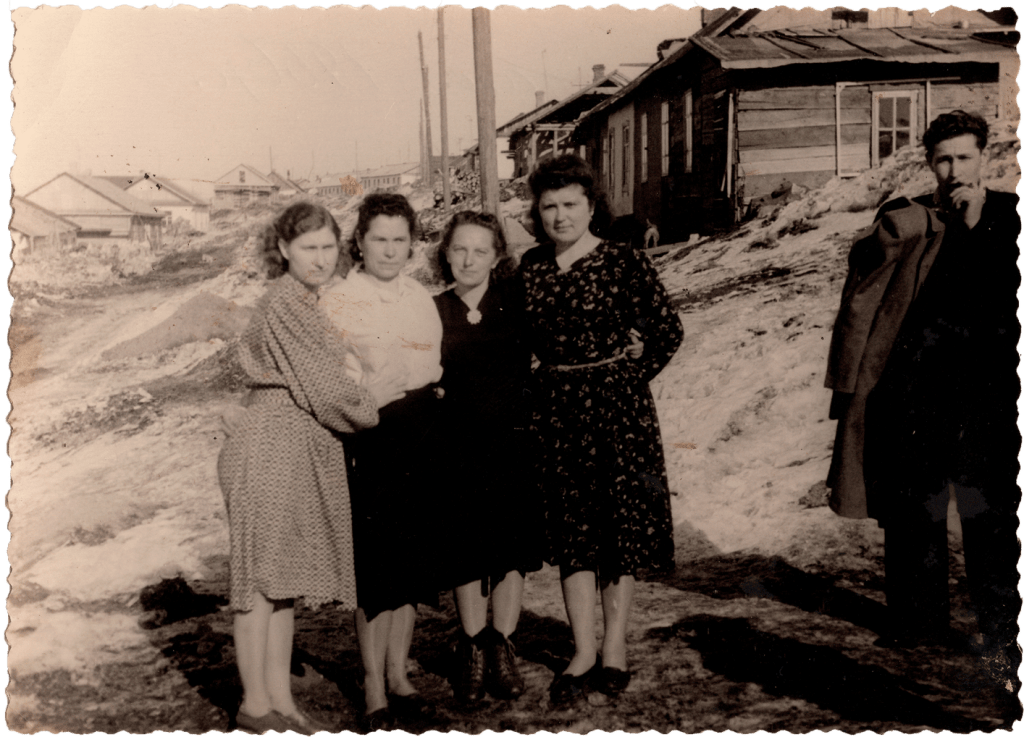
Lyubov Piddubna (second from the left), released from the Gulag camps, with friends, Magadan, 1956
Source: Private archive of Lyubov Pohonyuk (Piddubna)
LIA DOSTLEVA
cultural anthropologist
Photographs of people returning from the Gulag can be read as a photographic record of affiliation practices, or the documentation of restored and re-established connections. No wonder all the pictures we see in this section show the returnees surrounded by family or friends. Smiling man and woman holding hands; the man hugs the child tilting them slightly towards the camera so that it gets into the center of the composition; a group of women stand leaning towards each other, their tightly intertwined arms creating a kind of network of hugs, and the woman on the left gently holds her friend by the waist. All these photos are very physical; they are built around touch and physical contact.
Photography is often perceived as an unaltered copy of the real world, a proof of reality. For example, photographs were used to prove that a certain person was alive at a certain time and place in history. But also photography, in its material dimension, is an object the viewer can establish a deeper emotional connection with, or use it as evidence of such an emotional connection.
 After SIlence