
nature
Kemerovo and Tomsk regions
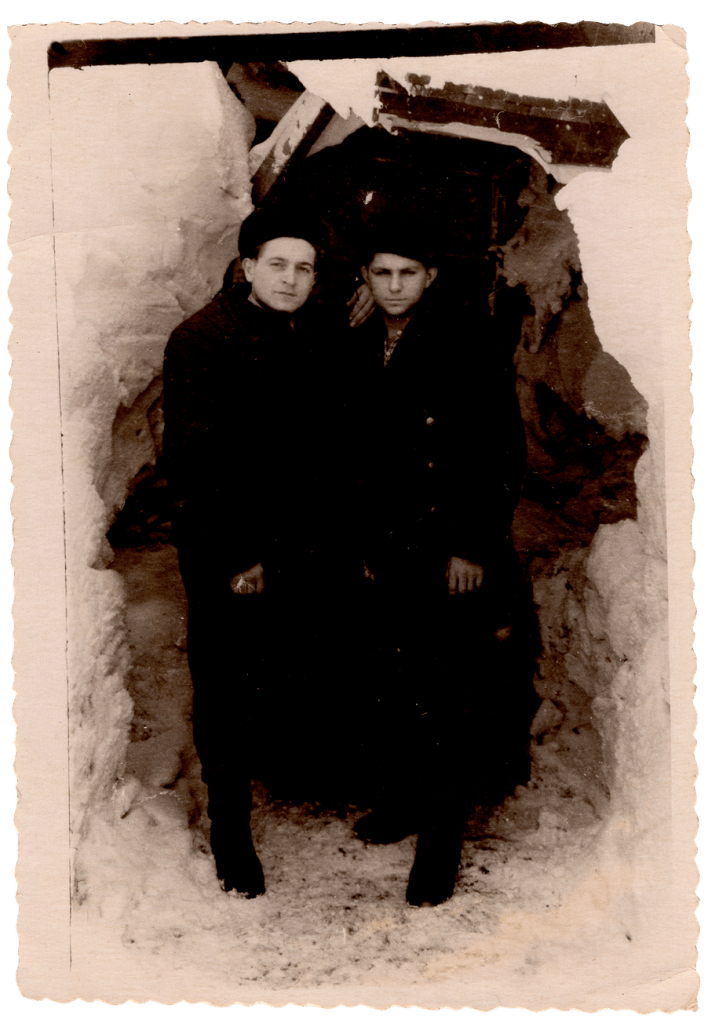
Mykhaylo Kutsyaba (right) with a friend in the Kemerovo region, 1953
Source: Private archive of Mykhaylo Kutsyaba
sOFIA SAMCHUK (PALCHEVSKA)
deported in 1947 to the Perm region
There were berries — ashberry and bird cherry. The forests there are large. We would break the twigs with the bird cherry. Winters were terrible there, with the frost down to −40, or even lower. So, everyone would have that board-made place, for firewood or coal, and we would hang the berry twigs out. They would freeze. And then you bring them inside — what a treat! That was good! Would anyone eat it here, I wonder? But I didn not understand, I thought it was very good.
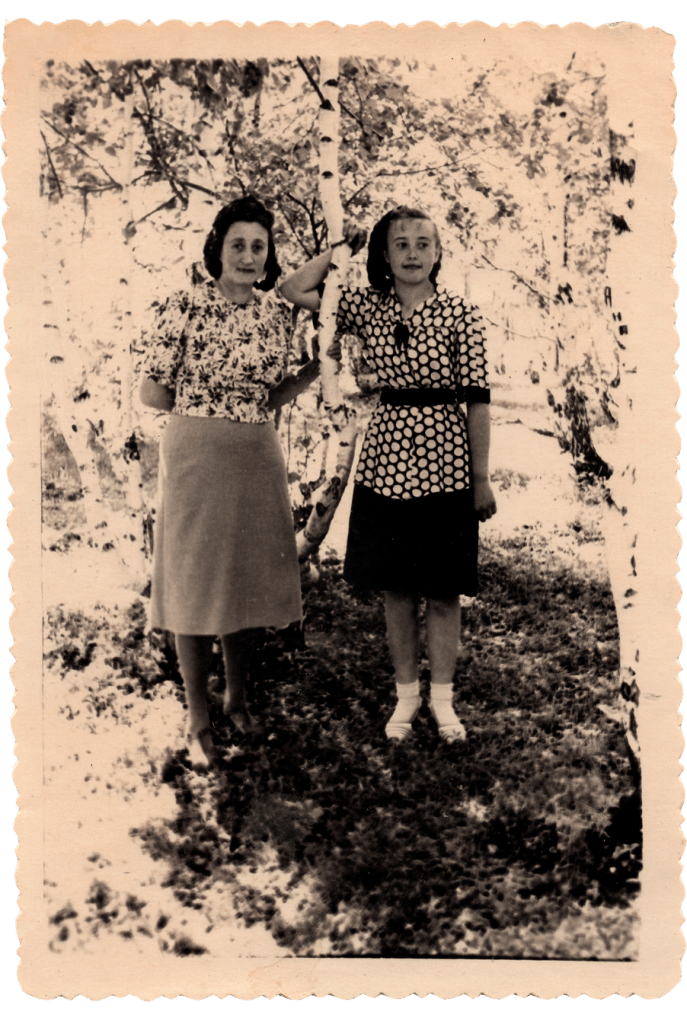
Maria Hulei, with her daughter Marta, in the Tomsk region, early 1950s
Source: Private archive of Marta Vvedenska (Huley)
TAMARA VRONSKA
historian
The first convoyed trains of deportees from Western Ukraine started arriving to the Krasnoyarsk Territory, Irkutsk, Novosibirsk and Omsk regions in mid-summer, in autumn and winter of 1944. According to the Soviet rationale, the vast rough terrain and harsh climate created an ‘ideal’ place to live for people opposing the government. In winter, the frost would go down to −55ºC; and there would be blizzards, and the frostbitten limbs. In autumn and spring, there was rain and sleet, piercing wind, and flocks of annoying mosquitoes. According to the deportees, in order to escape from flocks of mosquitoes, they had to light a fire and sit next to it all night. However, people have adapted to such natural conditions and developed new survival strategies. They gradually got accustomed to the unfamiliar taiga. They would go there to pick mushrooms, berries, and pine nuts; they hunted black grouse and small game.
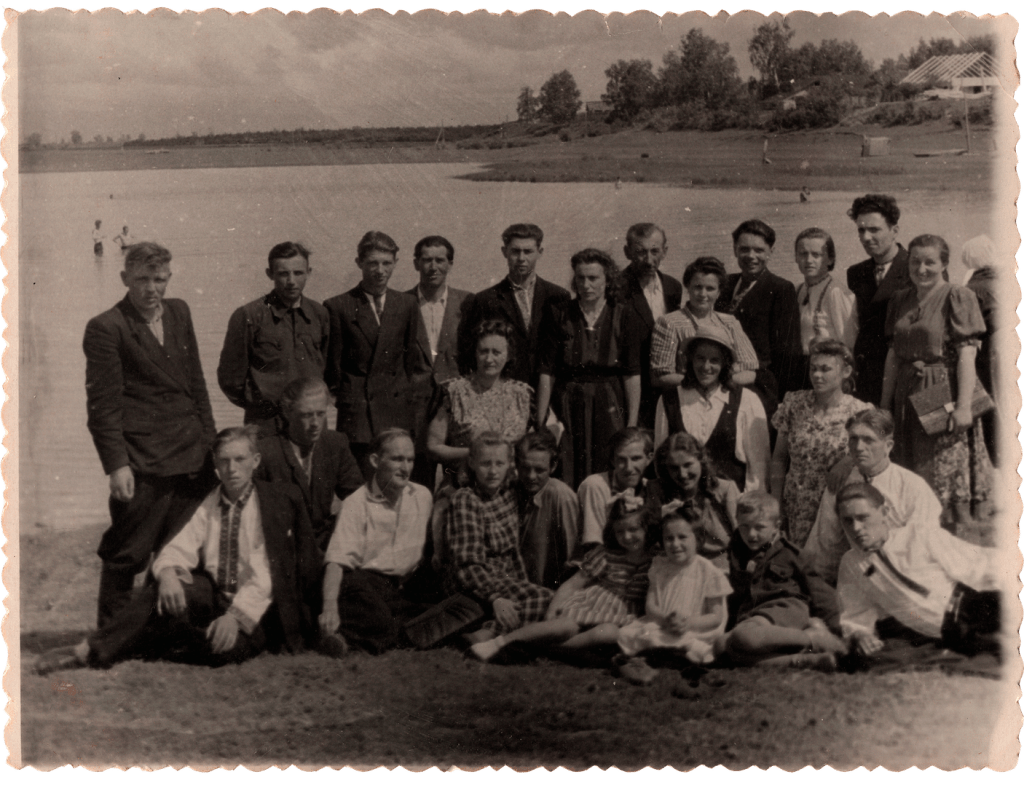
Special settlers on the banks of the Chulym River in the village of Zyryanske in the Tomsk region, 1954
Source: Private archive of Myroslava Krynytska (Sakharevych)
LIA DOSTLEVA
cultural anthropologist
In the photos of the deportees, nature appears mainly as a background where people are photographed. Interestingly, even though there were amateur photographers with their own cameras at the special settlements, theit lens almost always had people in the focus. A photo where you can see a beautiful landscape, river, forest, snowdrifts, flowers, plants, wildlife and suchlike are extremely rare and almost non-existent in the archives. If there are no people in the photo, then there is a steamer, buildings, machinery, etc. In the photos, nature is only used as a background. That is why if you need to understand the landscape the deportees had to stay in or their attitudes to the surroundings, as seen through their lens, you have to literally read in the margins of photographs. Interestingly, despite the almost complete visual absence, the memories often mention that Siberia was beautiful.
Please, also pay attention to the group photo by the river — a man on the far left has his jacket buttoned to the left, as is the case with women’s clothing. Apparently, he simply did not have the opportunity to get a men’s jacket.
 After SIlence