
LIFE AFTER
Lviv
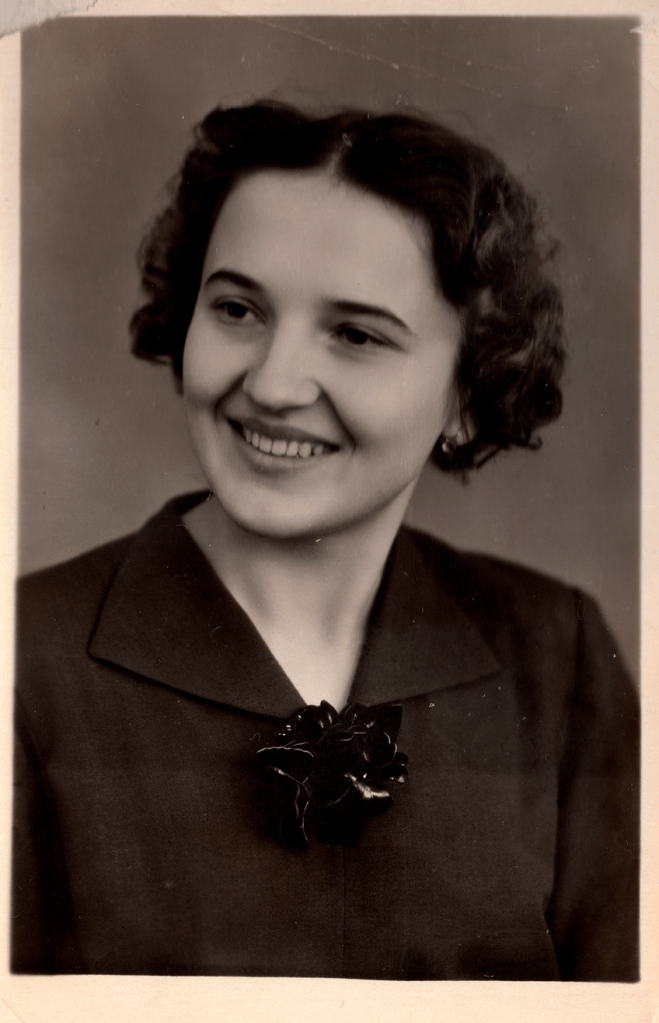
Myroslava Sakharevych upon her return to Ukraine, late 1950s
Source: Private archive of Myroslava Krynytska (Sakharevych)
mYROSLAVA KRYNYTSKA (SAKHAREVYCH)
deported in 1950 to the Tomsk region
In 1957 [my parents returned], and I came a year later. Immediately after, I worked within my occupation, at the pharmacy. I did not hide anything. But, you know, at first I did not share much, as they say. But I didn’t hide things. But one did not have to say much. Why? At work, in the beginning, no one asked, and I did not speak. There were those who did not even tell their children anything, and then they knew absolutely nothing. But I did not hide. I told things, I told everything.
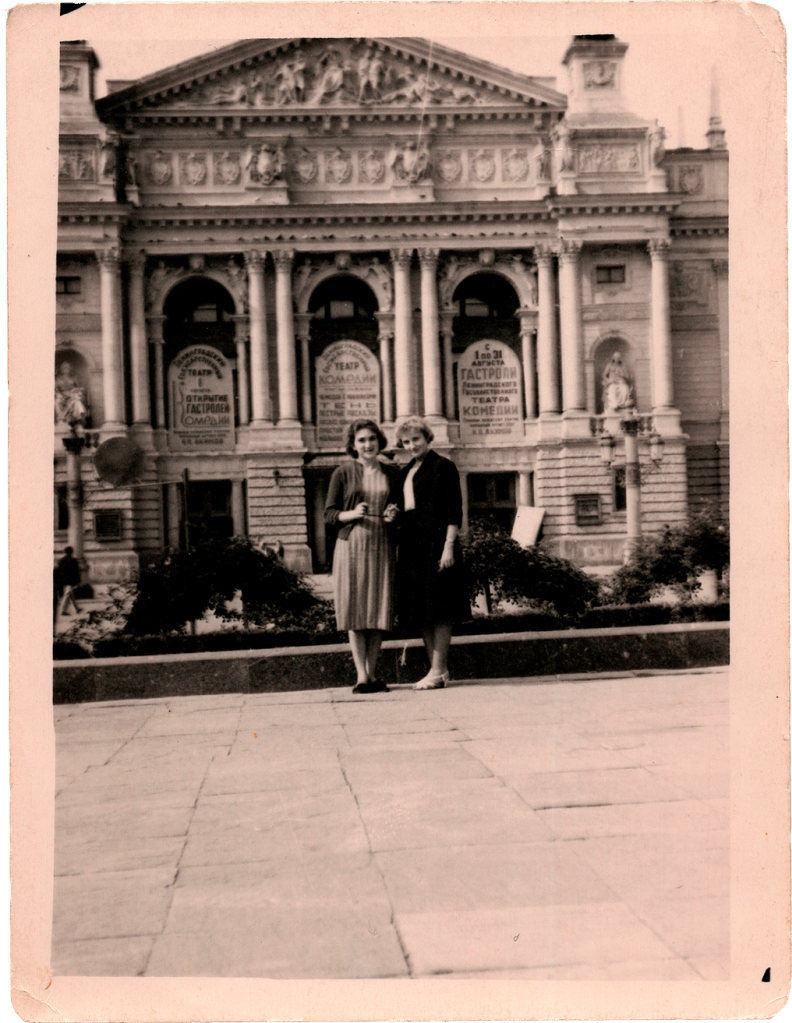
Myroslava Sakharevych (left) with a friend, Lviv, late 1950s
Source: Private archive of Myroslava Krynytska (Sakharevych)
TAMARA VRONSKA
historian
People deported from Western Ukraine in 1944-1953 were released, ie removed from special registered records, and they were released in groups during 1954-1964. However, they were not allowed to return to their previous places of residence; nor was their confiscated property reimbursed. Some were forced to leave Western Ukraine, or they lived there without permission. In 1954-1956, the released persons could be sometimes returned to places of special settlements. The stigma of political opponents stuck to them for decades as they had to fill out questionnaires when entering higher education or work, in the waiting lists for housing. Like all those repressed under ‘political’ articles, they were forbidden to live in classified areas, which included the capitals of the Soviet Republics, large industrial centers, border areas, and many other settlements. Registration was allowed on a case-by-case basis, upon the decision of local authorities.
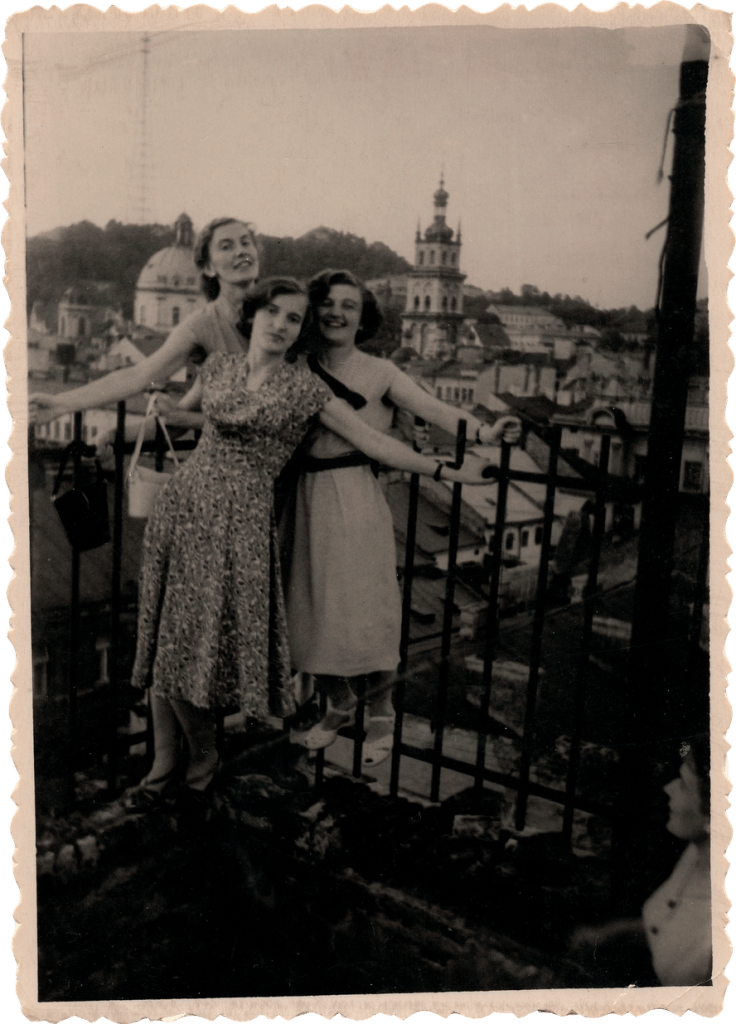
Myroslava Sakharevych (center) with friends, Lviv, late 1950s
Source: Private archive of Myroslava Krynytska (Sakharevych)
LIA DOSTLEVA
cultural anthropologist
For the special settlers, homecoming was a joyous event but it also meant that after many years of living elsewhere they had to start all over again. It is obvious that people were happy to return to normal life, although they were overwhelmed by the stigma of deportation. In the photos of this section, we see everything not found in the pictures from Siberia: professional studio portraits with jewelry and makeup; photographs against the background of historic buildings and centers of cultural life; beautiful little handbags not able to fit much in; dresses with open arms and light summer sandals. After all, these are urban photos. If you compare two photos from Lviv with photos from Siberia, it is easy to see that Lviv photos were taken with love and attention to the urban space where Myroslava and her friends are posing. The city in the background is the character of these photos, the same as people. In contrast, most Siberian photographs are compositionally built around people and their activities, and elements of nature or buildings in the background tend to get there by accident; they are not participants in the storyline.
 After SIlence