
LEISURE
Tomsk and Kemerovo regions
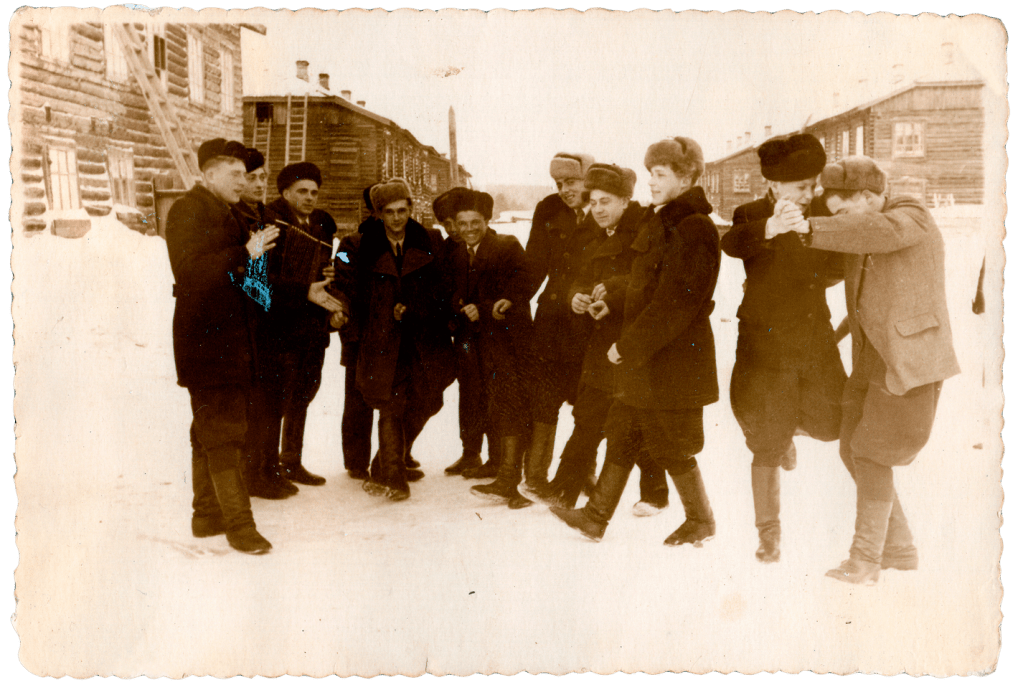
Mykola Tsvyk (third from the right) with his friends, Tomsk, 1950s
Source: Private archive of Vira Tsvyk (Borovets)
nADIA LOHOZA (DMYTRUK)
deported in 1949 to the Amur region
Then we were like a separate state of ours, all young people. And we didn’t admit anything there, we weren’t afraid. We sang those insurgent songs to ourselves as much as we could. We didn’t think anyone was watching us or anything. But we were observed… I also wrote poems myself. [Started writing] in Siberia. They are about the pain for Ukraine. The nostalgia was so terrible.

Mykhaylo Kutsyaba (right) and a friend listening to the radio, Prokopyevsk city in the Kemerovo region, 1950s
Source: Private archive of Mykhaylo Kutsyaba
TAMARA VRONSKA
historian
In 1945, the Soviet Union abolished the seven-day working week introduced as part of martial law. Until 1967, there had been only one day off. Even in the free time that the special settlers had, they tried to organize their leisure time, or some entertainment to cheer up. People gathered for singing and dancing, played musical instruments, shared memories, or listened to the radio. Women were most often engaged in embroidery. Men made household items. Free time was also used to write letters to relatives and to make toys for children.
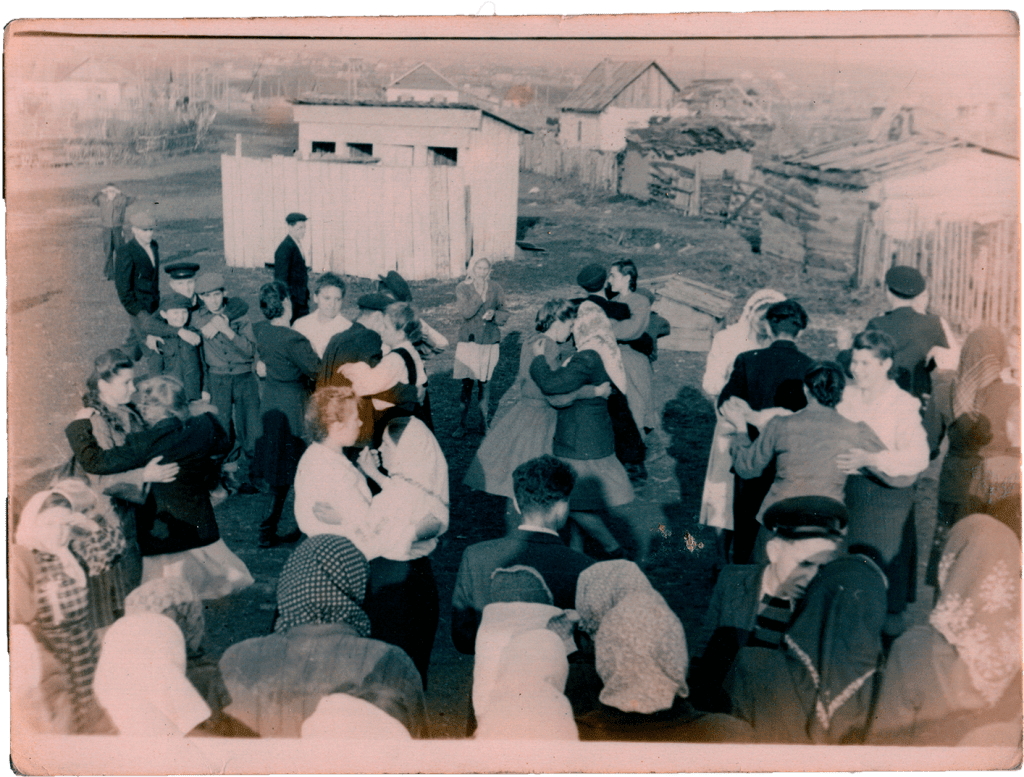
Dances at the wedding at a special settlement, Prokopyevsk city in the Kemerovo region, 1950s
Source: Private archive of Stepan Prytula
LIA DOSTLEVA
cultural anthropologist
In difficult conditions, a person cannot survive alone. Survival and a more comfortable existence, both at the household and mental levels, is contingent on the relationships with other people. These are family members who also found themselves in exile, and strangers who became forced neighbors. Both from the photos and from the stories we learn that free time was most often devoted to building and maintaining public relations. Entertainment was a kind of collective activity that created a common discursive and information field, and shaped the society. Common rituals and cultural practices helped the deportees maintain and reproduce Ukrainian identity in its performative aspect, maintain ties with relatives who stayed in Ukraine, and build new relations.
The pictures we see in this section can be called normal photos from abnormal times — people have fun, listen to the radio, and dance as enthusiastically as they would any other place.
 After SIlence