
FORCED LABOR
Kemerovo and Tomsk regions
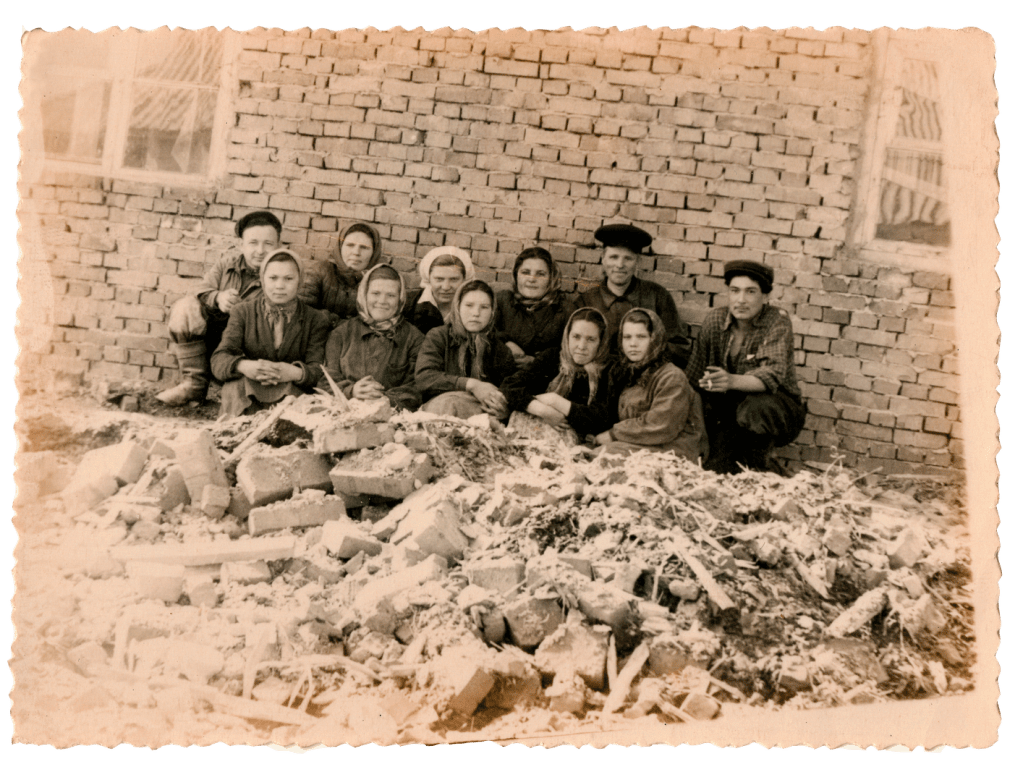
Stepan Prytula (first on the left) with his work colleagues in a construction brigade, Prokopyevsk city in the Kemerovo region, 1950s
Source: Private archive of Stepan Prytula
sTEPAN PRYTULA
deported in 1947 to the Kemerovo region
There was a mine, 300 meters deep. I was a plasterer at the mine. We had a team of six people. And my father worked there as a carpenter in a forest warehouse. The older [brother] went to work in the stable. He carried water to the dormitories. And there he fell ill and spent six months in a hospital. And there he died in Prokopyevsk. And the second, younger [brother], he worked as a driver in the mine. And broke his spine. At 7 o’clock they called from the hospital and said: ‘He died’.
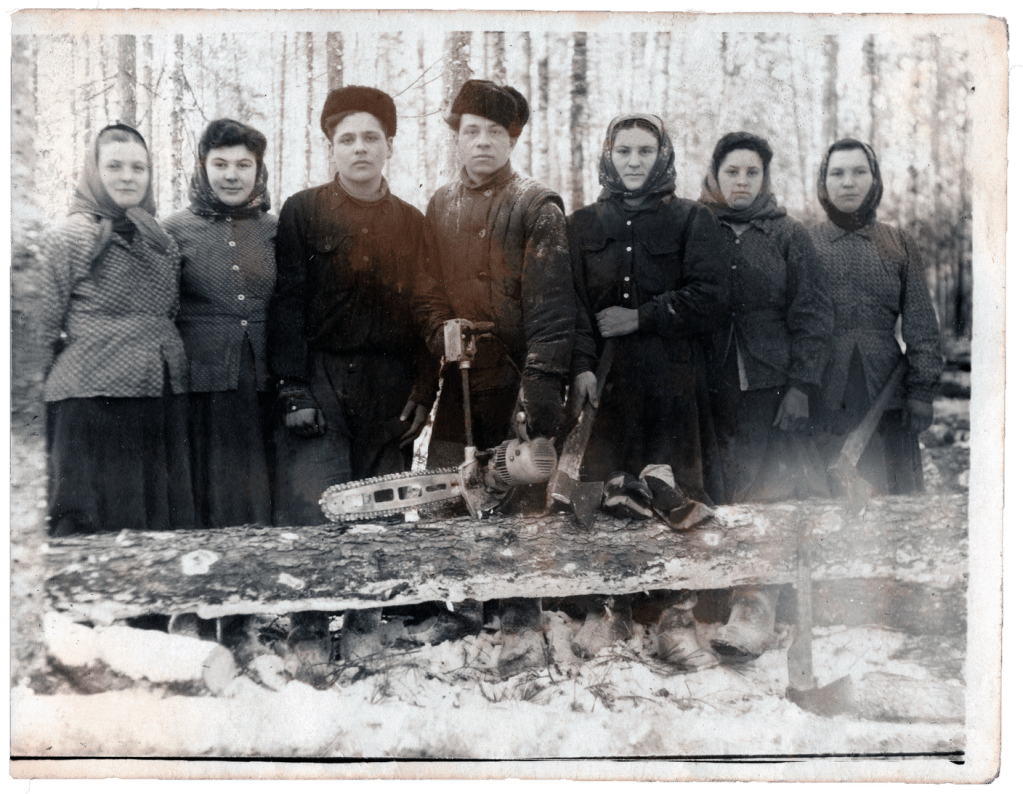
Special settlers at the logging in Tomsk region, 1950s
Source: Private archive of Vira Tsvyk (Borovets)
TAMARA VRONSKA
historian
Work was obligatory for all able-bodied special settlers. However, they were restricted in their free choice, and the place of work could be changed only with the permission of the commandant. Most special settlers did not work by profession, but were engaged where needed, such as for unskilled heavy labor. In the first years of deportations, they were sent mostly to timber farms, and later to the mining industry. They worked in the mines, built factories, and paved roads. People who could not manage the hard physical labor were usually employed in local collective farms. Special settlers, as well as other citizens of the Soviet Union, were threatened with criminal liability for evading work – 8 years in prison. Their salaries were lower than those of local workers. Nevertheless, for the special settlers themselves, labor was a guarantee of receiving food cards and cards for industrial goods (until the end of 1947), and some meager money; that is why labour was an important factor for survival.
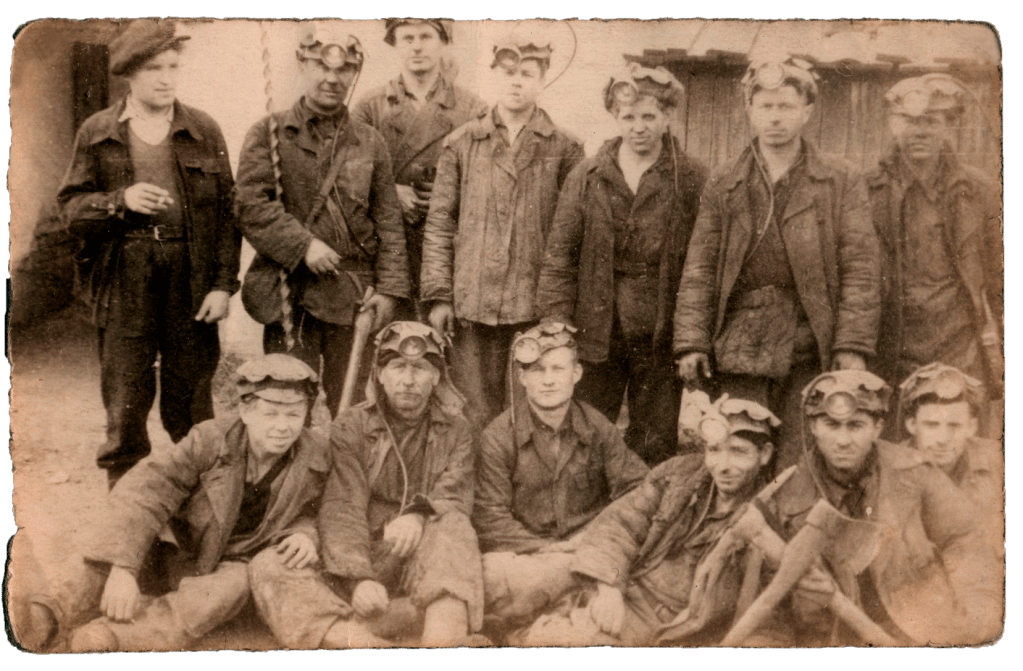
Mykhaylo Moravskyi (rightmost in the first row) among his work colleagues from the mine, Kyseliovsk city in the Kemerovo region, 1955
Source: Private archive of Maria Moravska
LIA DOSTLEVA
cultural anthropologist
People are willing to pose for photos ‘in the workplace’, although this situation can not be called grand or festive. Some are smiling, some are looking intently at the camera. These pictures give an opportunity to see what the daily life of special settlers looked like and in what conditions they had to work. It is clear that the working conditions of the special settlers were very difficult, and the tools they had were primitive and poor. Safety or personal protective equipment are out of question. We can even see gloves only in someone who poses with axes and a chainsaw. Women, as well as men, perform hard physical work on construction and logging. However, despite the difficult working conditions, the deportees still considered these moments of their lives worth documenting.
 After SIlence