
DEATH
Tomsk, Kemerovo, Omsk regions
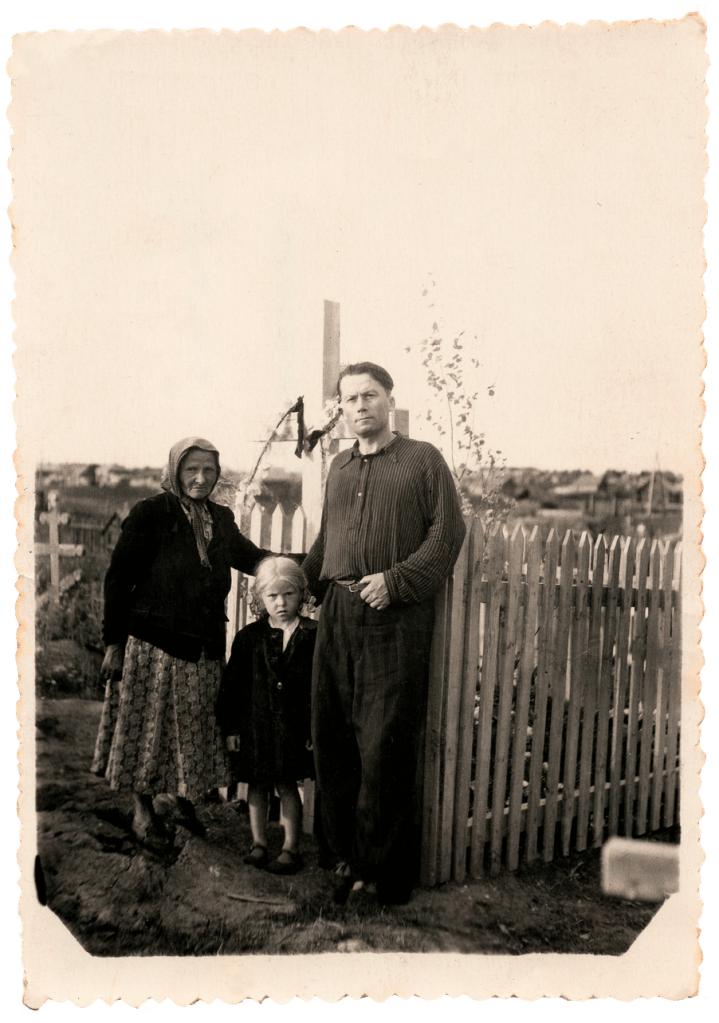
Relatives at the grave of special settler Olha Tymovchak, Zyryanske village in the Tomsk region, 1955
Source: Private archive of Lesya Tymovchak
lESIA TYMOVCHAK
deported in 1950 to the Tomsk region
1955, June 13. My mother died. The poor thing signed up for that experiment when she was treated with radiation in Tomsk. There, she got too much radiation and, in fact, she died from it. They put up a cross. And my father planted a birch tree on the grave. He said: ‘We will leave, so the place could be protected at least by a tree.’ My father actually had a dream to relocate the body here, to exhume it. Because it was already in the 1990s. But it didn’t work — the poor soul died.

Funeral of a special settler Mykola Prytula, Prokopyevsk city in the Kemerovo region, 1956
Source: Private archive of Stepan Prytula
TAMARA VRONSKA
historian
Mass deportations were associated with high mortality. People died while detained at transit stations, and on the road. For example, in the convoyed train sent from Lutsk station on December 23, 1944, eight infants under 6 months died of disease during a short run to Kovel station. The dead were usually not allowed to be buried on the road, but they were simply thrown out of the cars. Due to difficult living conditions, illness and famine, frostbite, accidents at hazardous industries, mortality was also high in special settlements. According to fragmentary data, between 1945 and 1950 alone, 14,435 people deported from Western Ukraine died. All deaths had to be recorded by the commandants. “Acts of death” were attached to the personal files of special settlers.
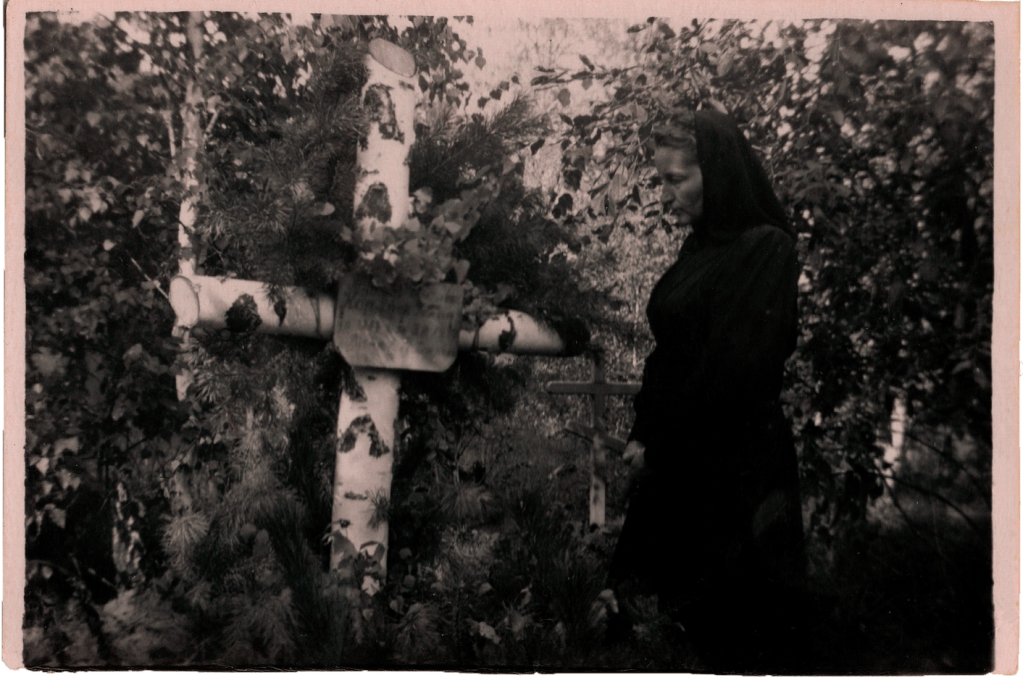
Widow at the grave of a special settler Korolyuk, Omsk region, 1950s
Source: Private archive of Marta Vvedenska (Huley)
LIA DOSTLEVA
cultural anthropologist
The tradition of photographing the dead in a coffin used to be quite common, especially in the villages. The composition of this photo, most likely made top-down, with the hands raised, allows you to see in detail the courtyard and the people who gathered to pay last tribute to the deceased. We can see children climbing higher up to see the dead person. We also see that the little girl standing next to them is more interested in the man with the camera than in the funeral. The materiality of photographs as artifacts also impacts our perception of the photographic image: film defects, printing, or damage that develop over time can enhance or alter the effect that the photograph has on the viewer. An old woman, a man and a little girl posing in the cemetery. We can assume it is a family who came to visit the grave of the little girl’s mother, although we do not know what exactly happened. The story of the personal loss is told in detail: the telling absence of a female figure, the facial expressions of adults and children, a carefully made wooden fence and a small tree planted on the grave.
 After SIlence