
CREATIVITY
Tomsk and Kemerovo regions
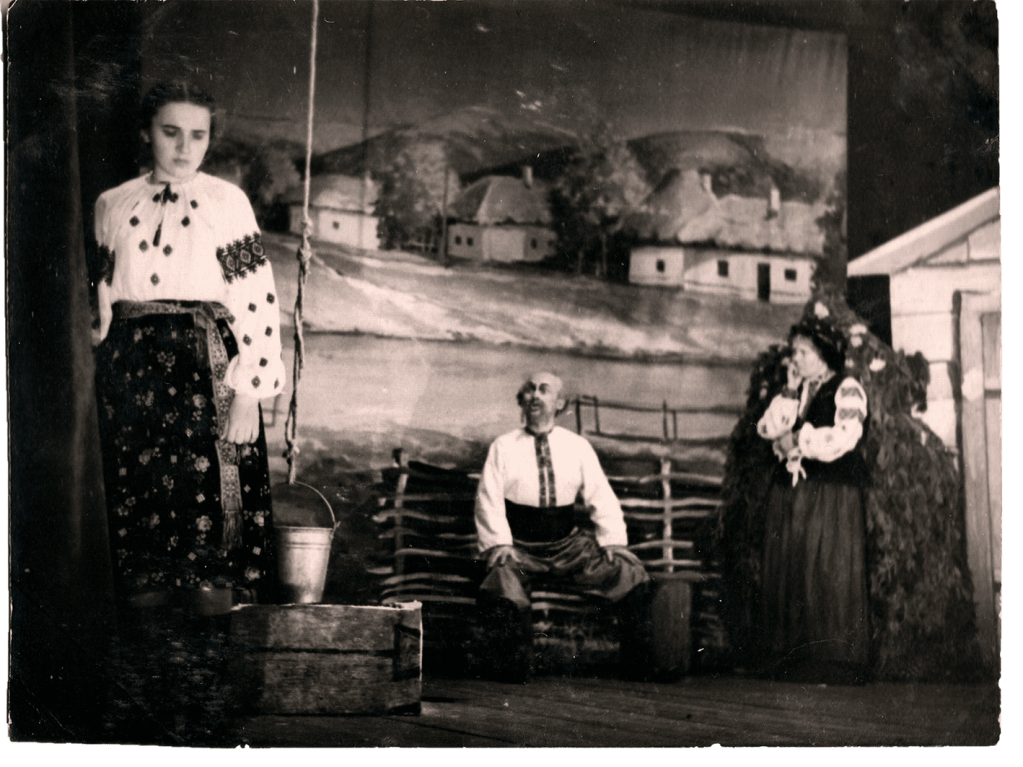
Myroslava Sakharevych (left) in the image of Natalka from the play ‘Natalka Poltavka,’ Zyryanske village in the Tomsk region, first half of the 1950s
Source: Private archive of Myroslava Krynytska (Sakharevych)
mYROSLAVA KRYNYTSKA (SAKHAREVYCH)
deported in 1950 to the Tomsk region
I was a child but I sang at school. I was attracted to what I loved. There were the brothers [Roman and Bohdan] Zheplinski, and they kept us all together. They even gave some concerts. Young people, you know, life went its own way. There was such a big club. [They put on] ‘Natalka Poltavka’. [I] sang. You can take my word for that — I knew a lot of those songs.
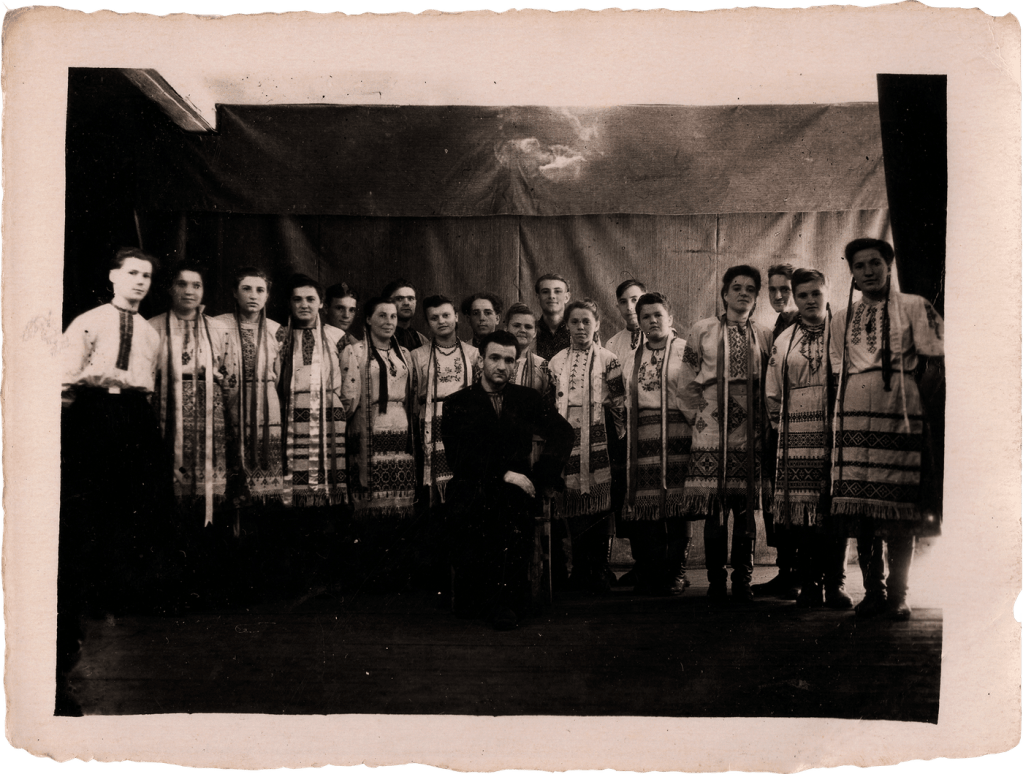
Choir of special settlers led by Josyph Shandra (in the center), Prokopyevsk city in the Kemerovo region, 1950s
Source: Private archive of Stepan Prytula
TAMARA VRONSKA
historian
During the deportation action in October 1947, the OUN underground shared an appeal ‘To those forcibly deported to Siberia and to Bolshevik forced labor!’ Among other things, it emphasized: ‘Under any circumstances, even in the most difficult conditions, please, save your Ukrainian soul and believe in our victory. Teach your children the Ukrainian language and the Ukrainian ‘Our Father’. Nurture in them an immortal love for Ukraine.’ In fact, the special settlers made great efforts to preserve their culture. They got together and sang Ukrainian songs, formed choirs and other creative groups. For example, plays were staged in Ukrainian. The repertoire included performances of ‘Nazar Stodolya,’ ‘On Sunday Morning She Gathered Herbs,’ ‘Natalka Poltavka’ and others. Almost all deportees from Western Ukraine wore and kept embroidered shirts. When someone did not have any such shirt, they would make them at the special settlement. Often, the children and grandchildren of deportees have kept them to this day.’
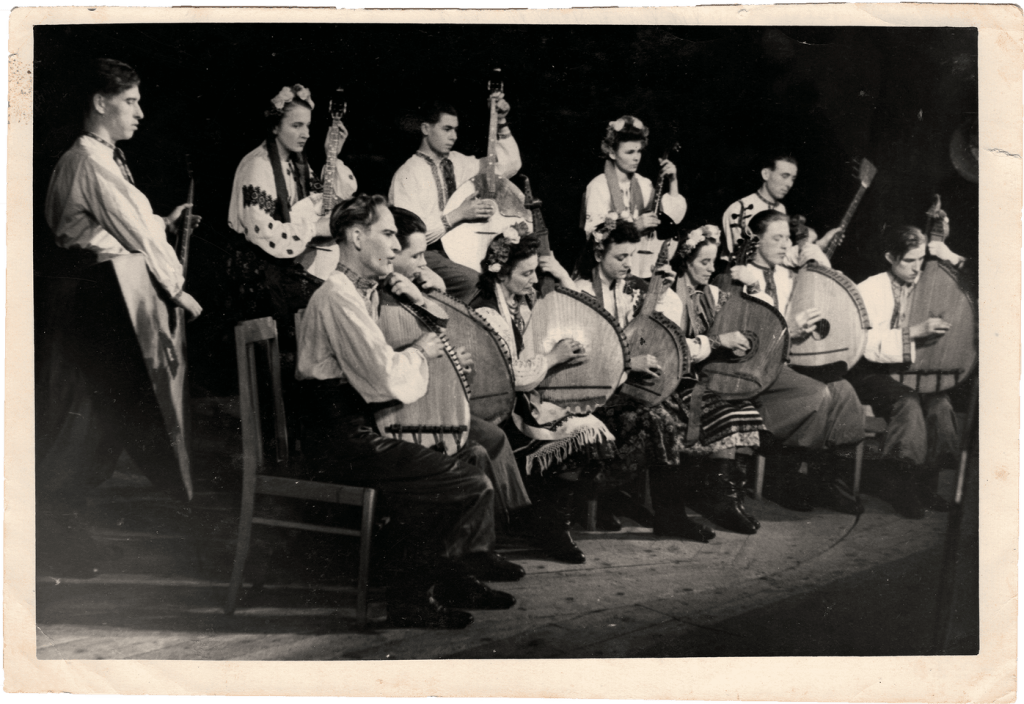
Performance of the Chapel of Special Settlers (men and women) from the Village of Torba at the Regional Review of Rural Amateur Art, Tomsk, 1954
Source: Private archive of Myroslava Krynytska (Sakharevych)
LIA DOSTLEVA
cultural anthropologist
Preservation of ethnic, religious, and cultural identity in extreme conditions takes more acute but generalized forms and is manifested through such symbolic features as ethnic clothing, language, prayers, songs, etc. In this case, culture is often understood in its pre-modern and ethnographic meaning. The statement is illustrated by the comments to this section and photos. In the photo of the theatrical production of ‘Natalka Poltavka,’ we can see a carefully painted background with huts, wicker fence, and a hand-made water well. On the other hand, all creative activities of special settlers were censored and strictly regulated. In other words, it is hard to set the line between cultural resistance and the desire to preserve one’s identity and the centrally imposed vision of Ukrainian culture as purely ethnographic, or flattened to a safe stereotype.
The history of the bandura band created by the Zheplinsky brothers in Siberia is fascinating. Furthermore, they managed to take their musical instruments with them from home and keep them on the road, and then started producing new instruments in exile. This is amazing.
 After SIlence