
COMMUNICATION WITH FAMILIES
Tomsk, Amur and Khabarovsk regions
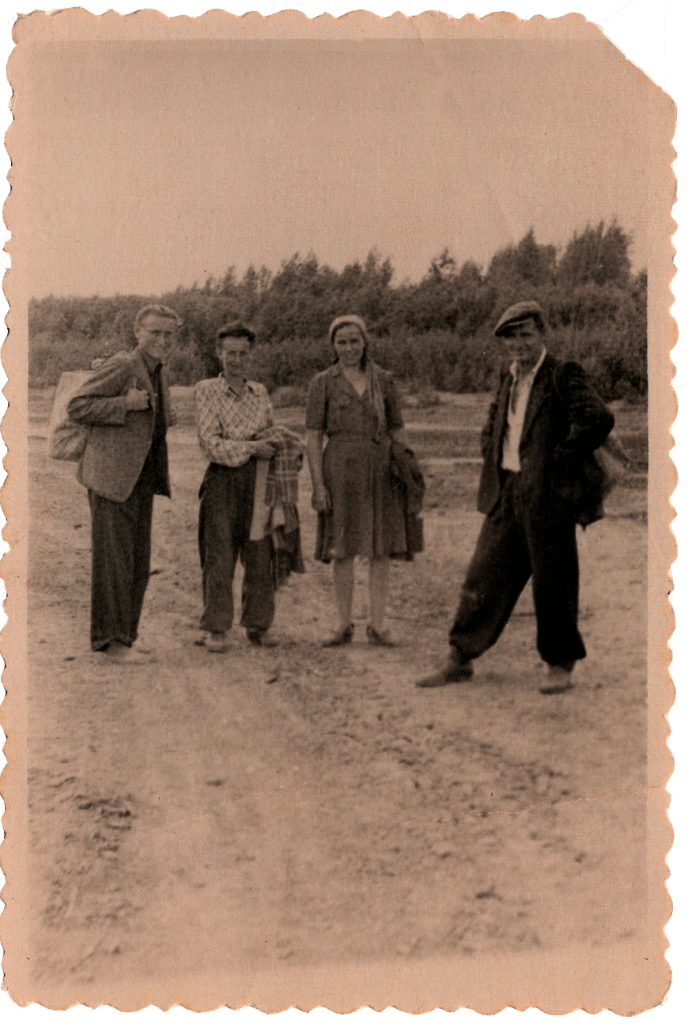
Special settlers on the way to the district center Zyryanske in the Tomsk region, 1950s
Source: Private archive of Natalia Voloshanska (Lenets)
nATALIA VOLOSHANSKA (LENETS)
deported in 1950 to the Tomsk region
Most of the parcels were sent to us by my grandmother. And my aunt also sent us parcels. Well, what was allowed? Some grain, even. Grandma was baking the Tsvibak* cake. They sent us what was allowed. We had to walk 18 kilometers on foot, to Zyryanka, to receive the parcels.
*tsvibak is a biscuit
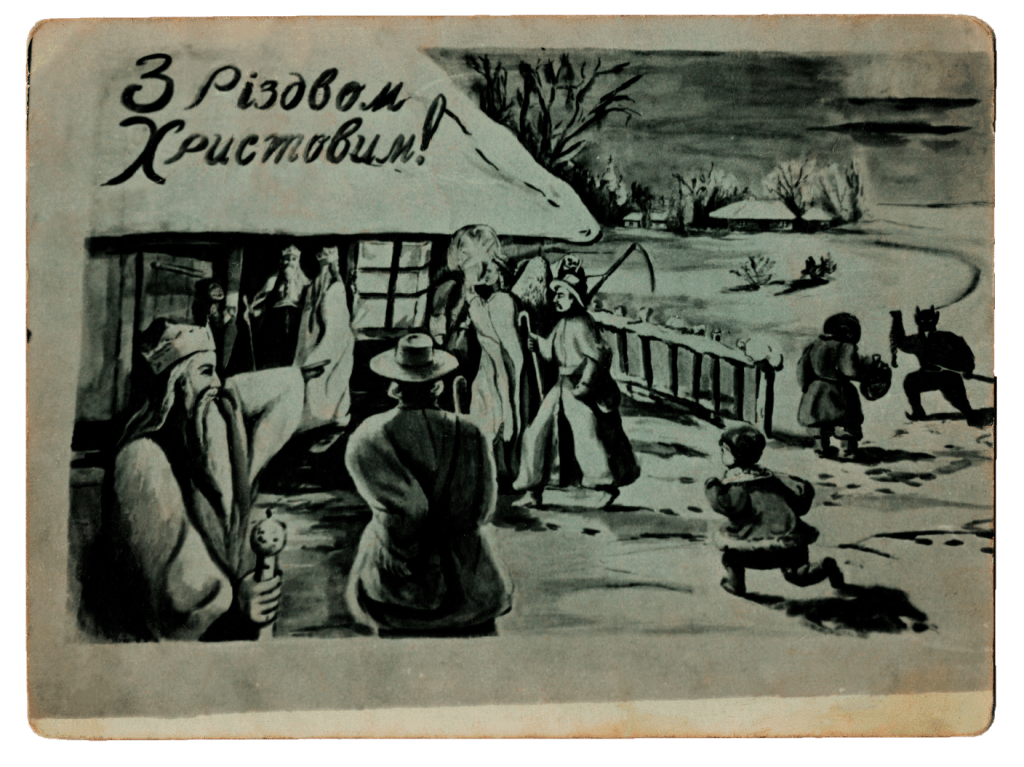

Postcard sent by a prisoner Yosafat Zavadka to his younger sister Maria at a special settlement in the Amur region, 1954
Caption: ‘Dear sis, have the merriest holidays and a happy New Year. 18 ХІІ 1954. Vorkuta’
Source: Archive of the After Silence NGO
TAMARA VRONSKA
historian
Special settlers who had relatives in Ukraine could receive letters and parcels from them, mostly with food. During the war, postal service was complicated, that is why the communication was established after it was over. The content of the packages from Western Ukraine at that time was quite modest, and it became richer after the famine of 1946-1947. All packages were strictly controlled. The unidentified ‘controllers’ often stole food or deliberately spoiled it by mixing flour, cereals and other food. The special settlers also kept in touch with their relatives who were prisoners in the Gulag camps. However, the number of letters was strictly limited. Correspondence had to be censored. The situation has significantly improved after Stalin’s death.
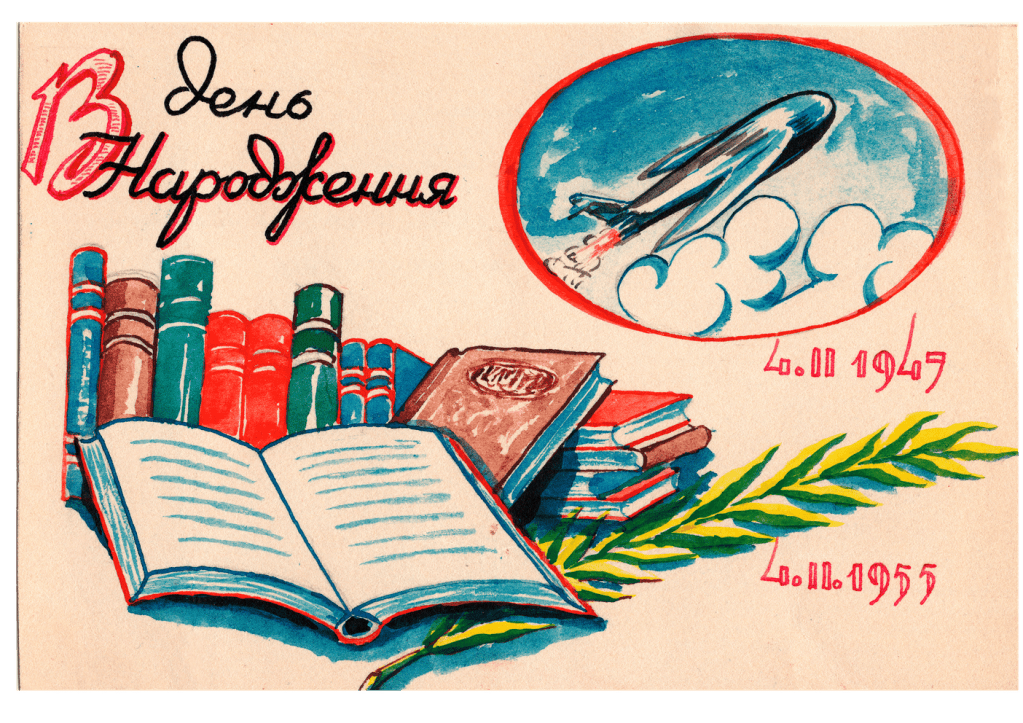

Postcard sent by prisoner Yulian Skytsky to Roman’s son to a special settlement in Khabarovsk region, 1955
Caption: ‘For the birthday, to my dearest son Romko, Stay healthy, happy, and all the best to you. Your father.’
Source: Private archive of Lidia Kitsyla (Skytska)
LIA DOSTLEVA
cultural anthropologist
How do you send a postcard from the Gulag to relatives if there were obviously no postcards available? Prisoners had to cope with the improvised materials, such as a birthday greeting for a son was a carefully painted stylization of a typical Soviet postcard, with a date written in a felt-tip pen. We see here a stack of books and a plane that rises above the clouds — it could be understood as the birthday wishes.
A Christmas card is a photocopy. Here, we can see either an impersonated nativity scene or the real three wise men near a snow-covered Ukrainian house. There is a devil nearby; you can also see other traditional figures of the nativity scene, such as the death with a scythe, and a Christmas star. One of the magi is pointing to the light coming out of the window of the house, explaining something to the peasant, who has just approached, apparently; other people are also hurrying to the house. Perhaps, according to the artist’s plan, the Christmas miracle happened right here? For the person who sent the postcard, it was obviously important that the image could resembled their home. By the way, if you look closely, you can see a church with a cross at a distance.
 After SIlence